Tarneeb JOJO
- 4.2
- Rating
- 1.00M
- Installs
- Free
- Price

 Analysis by App-foxy
I found Tarneeb JOJO most appealing as a straightforward way to bring a familiar trick-taking card game onto a phone. It is a free card game from jogamer, built around playing Tarneeb on a device and sharing a match with friends. That sounds simple, and the app largely keeps that promise: the focus is on getting into a game rather than surrounding the table with unnecessary extras.
For someone trying Tarneeb digitally for the first time, the important thing is to approach it as a social card game rather than as a solo time-killer. The best experience comes when you already have friends or family members who know the game, or when you are willing to learn the rhythm of bidding, choosing a trump suit, and following the cards played in each trick. I enjoyed that the central idea remains recognizable instead of being buried beneath unrelated modes.
The game has been available since August 5, 2016, and its current version is 1.5.9. Its average rating is 4.2 from roughly eighteen thousand ratings, while the app has passed one million installs. Those figures suggest that it has found a substantial audience, but they do not remove the need to understand what kind of player it suits. This is a focused Tarneeb experience, not a broad collection of every popular card game.
You May Also Like

 Blood Strike: 2.5 Anniversary
Blood Strike’s Loadouts Turn Every Drop Into a Tactical Gamble
A close look at Blood Strike’s custom loadouts: how fast access to signature weapons reshapes its battle royale rhythm, rewards preparation, and narrows the gap between fights.

 Pandora - Music & Podcasts
Pandora’s Music Is Easy to Start, but Harder to Recover
Pandora’s strength is its low-effort path from a seed to a station. Its weak spot is how much confidence it asks you to place in connection, setup, and quiet recovery.

 8 Ball Pool
 Is Built on Rivalries, Rematches, and Routine
A close look at the rivalries, rematches, shared routines, and unanswered safety questions that turn a quick pool match into a persistent mobile community.

 Samsung Music
’s Quiet Strength Is Playing What You Already Own
Its reach comes less from spectacle than from dependable access to a personal library. That simplicity is both the app’s strongest retention engine and its ceiling.

 AccuWeather: Weather Radar
AccuWeather Review: A Quick, Clear Forecast for Everyday Decisions
For everyday plans, the best forecast is the one you can understand quickly. AccuWeather makes rain timing, radar, and local conditions easy to act on, with a few trade-offs.

 Hill Climb Racing
Why Hill Climb Racing Still Turns Crashes Into One More Run
A tiny car, a bumpy hill and one more upgrade: Hill Climb Racing keeps resurfacing because its simple chaos makes every near-miss feel personal.
More From Our News Desk



What to expect before your first match
Tarneeb is a partnership-based trick-taking game, so your enjoyment depends on more than the cards in your own hand. You need to read the bidding, judge how strong your hand is, and then cooperate with your partner through the cards you play. That makes each round more thoughtful than a game where you simply place the highest card available.
On a phone, the main advantage is convenience. I can play without preparing a physical deck or finding a table, and the small format makes it easy to fit in a short session when friends are available. The trade-off is that the screen cannot reproduce every part of a face-to-face game. Table talk, gestures, and the natural pace of handling cards are replaced by taps and visual cues.
The store identifies the game as suitable for Teen users. That is worth keeping in mind if you are choosing it for a younger player or a family device. The game is free to install, with optional in-app purchases listed from $0.99 to $99.99 per item. I would treat those purchases as a reason to check the device’s purchase controls before handing the phone to someone else, especially because a free download can still present paid options.
The developer, jogamer, has kept the identity of the product very clear. You are not opening a complicated card platform with a long onboarding sequence. You are opening a Tarneeb game. That narrow purpose is a strength for players who already know what they want, although beginners who expect tutorials, puzzles, or many different card formats may find the scope limited.
Installing and getting oriented
The minimum operating-system requirement is Android 5.0, which makes the game accessible on many older Android devices. After installation, I recommend taking a moment to look at the whole screen before starting a match. Identify where the cards appear, where the current trick is shown, and how the game indicates whose turn it is. This small pause prevents the most common first-session mistake: tapping quickly before understanding the table.
Do not judge your first few minutes by whether you immediately win a hand. A meaningful first success is simpler: enter a match, recognize your partner, understand the bidding stage, and complete a trick without accidentally selecting the wrong card. Once those steps feel natural, the score becomes easier to follow and the strategic decisions start to matter.
If you are playing with friends, agree on the rules and the pace before beginning. Tarneeb players often bring experience from physical games, and small differences in habits can create confusion. Decide who is explaining the rules, whether new players may ask questions during a hand, and whether the group wants a relaxed game or a competitive one. That conversation is more useful than assuming everyone interprets each screen in exactly the same way.
For a first-time player, I would also keep the phone in a stable position and avoid switching rapidly between apps during a turn. A card game is sensitive to missed visual information. If the game is being played in a noisy room or while people are talking, ask the group to pause briefly during bidding and card selection. This is not a flaw unique to the app; it is simply harder to recover from a missed action when the table is digital.
How to reach a first successful hand
Start by watching the bidding rather than trying to predict everything at once. The bid is not just a number to beat. It is a statement about how many tricks your partnership believes it can take, so it should be connected to the strength and shape of your hand. If you are new, concentrate on making a sensible decision instead of making the most ambitious one.
Once a trump suit has been selected, remember that trump cards can change the value of an otherwise ordinary trick. A card that looks weak in its original suit may become useful when that suit is trump. At the same time, playing a trump too early can remove an important resource before you know how the remaining tricks will develop. I found it helpful to think one trick ahead rather than trying to calculate the entire hand.
Following suit is another point where beginners can lose control of a round. Before tapping, check the cards already played and confirm which suit led the trick. If you can follow that suit, do so; if you cannot, then consider whether using trump is necessary or whether saving it is wiser. On a small screen, this check takes only a second, but it can prevent an avoidable mistake.
Your partner’s cards are hidden, so cooperation has to happen indirectly. The cards you play communicate information through timing and choice, even when there is no conversation about the hand. A low card can sometimes be more useful than a high one because it lets your partner win the trick or preserves your stronger cards for later. This is where the app becomes more interesting than simple high-card play.
A practical first-session routine is to focus on three questions before every card:
- Which suit was led, and can I follow it?
- Who is currently likely to win this trick?
- Do I need to spend a strong card now, or can I preserve it?
That routine is intentionally modest. It gives a new player something concrete to do without turning the first game into a mathematics exercise. After a few hands, you can add more advanced thinking, such as tracking which trump cards have already appeared and estimating what your partner may still hold.
Where new players usually get confused
The first source of confusion is the difference between winning a single trick and fulfilling the partnership’s bid. Taking one trick feels good, but the round is judged by the larger contract. A player can win several early tricks and still leave the partnership short if the bidding was too aggressive or if the later cards were handled poorly.
The second problem is treating every high card as an automatic winner. High cards are valuable only in context. If the suit has already been led and stronger cards have appeared, your card may no longer control the trick. Conversely, a modest trump can win when no higher trump is played. I recommend looking at the whole trick rather than focusing on the printed rank of your own card.
New players can also misread the role of the partner. Because the partner’s hand is hidden, it is tempting to play only for personal advantage. That approach often wastes the partnership’s strength. If your partner is already winning the trick, adding an unnecessarily powerful card may gain nothing while leaving you weaker for the next turn.
Another practical difficulty is pace. Experienced players may make decisions quickly because they already recognize common patterns. A beginner may need more time to identify the led suit, remember the trump suit, and compare the possible outcomes. If you are playing with friends, say that you are learning before the first hand. A patient table makes the app far more welcoming than a group that treats every pause as a mistake.
The interface can also feel less forgiving than a physical table because all information is compressed into a small display. I suggest holding the phone close enough to read the suits comfortably, but not so close that you lose sight of the complete hand. If you regularly tap the wrong card, slow down and use a deliberate rhythm: inspect, decide, then select. Fast tapping is rarely an advantage in a thinking game.
Using it with friends in everyday life
A realistic use case is a short evening session with three friends who already know Tarneeb. One person can start the game, the others join, and the group can settle into several hands without bringing out a deck or clearing a table. The phone becomes a convenient meeting point, particularly when everyone is in the same room but does not have a physical deck available.
The app also makes sense for friends who are separated by distance and want a familiar activity rather than a large multiplayer game. The social value comes from sharing the same card decisions and discussing the hand afterward. I would not choose it for a group that wants constant action, colorful mini-games, or a long progression system. Its appeal is the conversation and strategy around Tarneeb itself.
For teaching, use the first match as a demonstration rather than a serious contest. Explain why a bid was chosen, point out the led suit, and discuss whether a trump card was worth spending. This turns mistakes into lessons. A useful habit is to review one turning point after each hand instead of analyzing every card; that keeps the session friendly while still helping the beginner improve.
One non-obvious advantage of digital play is that it encourages consistent practice. Physical games may depend on finding a deck and enough players at the same time. Here, the barrier is lower, so a player can become familiar with bidding and trick management through repeated hands. The limitation is equally important: practice against people who play very differently can teach habits that do not transfer well to your regular group, so discuss decisions instead of copying every move blindly.
How it compares with a physical deck and other card apps
Compared with a physical Tarneeb game, this app wins on setup and portability. There are no cards to shuffle, no need to remember the score on paper, and less chance of a card being misplaced. It is especially useful when the group wants to start quickly or when a phone is easier to access than a complete deck.
The physical version remains better for players who enjoy reading the table through body language and conversation. It also gives experienced players more freedom to explain a hand naturally. A phone can organize the play, but it cannot fully replace the atmosphere of people gathered around a table. If the social ritual matters more to you than convenience, the traditional option may be preferable.
Compared with broad card-game apps, Tarneeb JOJO is more focused. A general card platform may offer more varieties, larger menus, or different ways to play, while this game keeps attention on Tarneeb. That focus is useful if you already know the game and do not want to search through unrelated modes. It is less suitable if you want one installation to cover solitaire, poker-style games, rummy, and several trick-taking formats.
I would also distinguish it from competitive card platforms designed around elaborate rankings or long-term progression. Those alternatives may be better for players who want a persistent challenge, detailed statistics, or a wider competitive ecosystem. This title is easier to recommend when the goal is a direct match with friends, not when the goal is to build a large digital card-game profile.
Small habits that improve the experience
My first tip is to treat bidding as partnership communication, not personal bravado. Before choosing a high bid, ask whether your hand contains reliable winners, useful trump strength, and enough support to survive when the lead changes. A spectacular-looking hand can still be awkward if its strength is concentrated in the wrong places.
My second tip is to track the trump cards mentally, even if you can remember only the strongest ones. You do not need perfect memory to benefit. Knowing that several important trumps have already been played can change whether you lead a side suit, protect a high card, or expect your partner to control the next trick.
My third tip is to use the first few games to learn the interface rather than experiment with risky strategy. Notice how the game marks turns and how the selected card leaves your hand. Once the controls no longer demand attention, you can spend that attention on partnership play. This is particularly helpful for people moving from physical cards to a touchscreen.
A fourth useful habit is to review the moment the partnership fell behind. Was the bid too optimistic, was a trump spent too soon, or did a player fail to recognize that the partner was already winning? Identifying one cause is more productive than blaming the final score. It also gives a group a shared vocabulary for improving the next hand.
There is a financial consideration as well. Since the game is free but includes optional items priced between $0.99 and $99.99, I would avoid treating every purchase prompt as part of the core experience. Set a personal limit, use device-level purchase protections when appropriate, and decide whether the basic game already meets your needs before spending. For a casual group, the value is in the matches themselves, not in buying something simply because it is visible.
Who should play and who should skip it
I recommend this game to Tarneeb fans who want a convenient digital table, to friends looking for a familiar activity, and to beginners who are comfortable learning through actual hands. It is also a sensible choice for someone using an older Android phone, since the minimum requirement is Android 5.0. The free entry point makes it easy to test with a group before committing to regular play.
I would be more cautious if you prefer solo card puzzles, fast arcade feedback, or a large selection of unrelated games. The narrow focus may feel repetitive if Tarneeb is not already interesting to you. Likewise, players who demand the atmosphere and flexibility of a physical table may find the phone format too impersonal.
It may not be the best choice for a group that cannot agree on rules or patience. Digital convenience does not solve disagreements about bidding, turn order, or teaching style. Before judging the game, make sure the people playing are aligned about whether the session is competitive or instructional. The same app can feel relaxed with a supportive group and frustrating with an impatient one.
My recommendation after settling into it
After using it as a focused Tarneeb game, I see the main appeal clearly: it removes the practical obstacles between wanting to play and actually starting a match. The strongest moments come when everyone understands the rules, watches the same trick develop, and makes decisions with the partnership in mind. That is where the app feels purposeful rather than merely convenient.
Its limitations are also clear. It is not a replacement for every kind of card entertainment, and beginners may need a patient friend to explain the strategic details. The touchscreen format can make the table feel less natural, while optional purchases mean that “free” should be understood as free to start rather than a promise that every item is included without charge.
Still, I think Tarneeb JOJO is worth trying if Tarneeb is already part of your social circle. Install it, begin with one relaxed match, and measure success by whether you can follow the turn, make a reasonable bid, and complete a few tricks without hesitation. Once that foundation is comfortable, start tracking trump cards and thinking about your partner’s likely hand. That gradual path gives the game room to become genuinely strategic.
My final view is that jogamer has delivered a practical, specialized card game rather than an overloaded package. With a 4.2 average and more than a million installs, it has clearly attracted many players, but its real value depends on wanting this particular game. If you do, the free download is an easy way to bring Tarneeb to your phone and to friends. If you want variety, solo content, or a richer competitive system, a broader card app will probably serve you better.
FAQs for Tarneeb JOJO
01What is Tarneeb JOJO, and how is the game played?
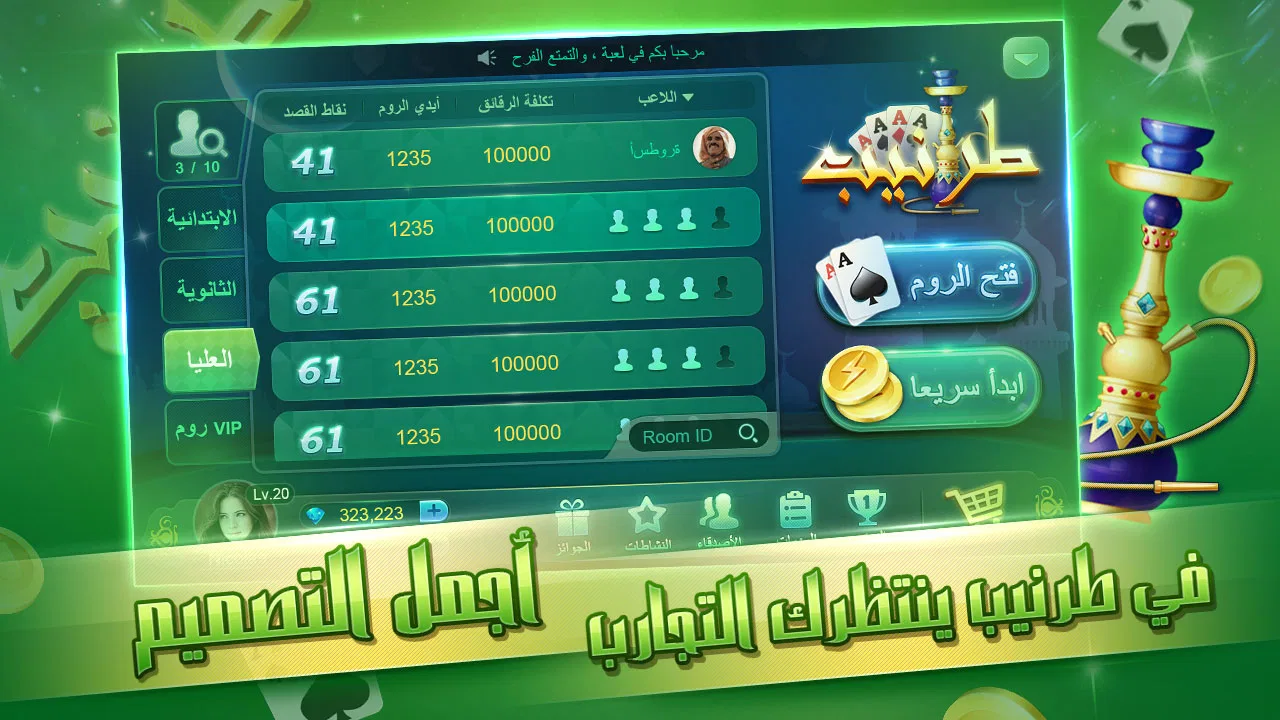
Tarneeb JOJO is a digital version of the popular Tarneeb trick-taking card game, designed for players who enjoy competitive rounds with partners. The game generally involves bidding, selecting the trump suit, and trying to win the number of tricks announced. Its interface is intended to make the rules, cards, turns, and scores easier to follow on a mobile device.
02Can I play Tarneeb JOJO without an internet connection?
Offline availability may depend on the specific version and the mode selected. Some editions of Tarneeb games offer practice matches against computer-controlled opponents, while online rooms and multiplayer features normally require an active internet connection. Before downloading, check the store description and in-app requirements, because offline play, matchmaking, and certain events may not be available in every release.
03Does Tarneeb JOJO support multiplayer games with friends?
Tarneeb JOJO is primarily aimed at social and competitive card-game sessions, and multiplayer functionality may allow users to play with friends or other online participants. Features can include private rooms, invitations, rankings, or random matchmaking, depending on the current version. Players should review the available room options after installation, as online features and player limits may change through updates.
04Is Tarneeb JOJO free to download and play?
The application may be available as a free download, but users should not assume that every feature is completely free. Many mobile card games include advertisements, optional purchases, virtual items, or premium benefits. Check the Google Play Store or Apple App Store listing for the latest pricing information, supported devices, subscription details, and whether purchases are required for particular modes or rewards.
05What should I check before installing Tarneeb JOJO?
Before installing Tarneeb JOJO, check that your phone meets the required operating-system version and has enough free storage for the application and future updates. It is also worth reviewing the requested permissions, privacy information, advertising policy, and user reviews. If you plan to play online, make sure your connection is reliable and understand that account, chat, or multiplayer features may require additional data access.
Pros
- Simple rules make it easy for new players to start quickly.
- Online multiplayer lets you challenge opponents beyond your local group.
- Short rounds suit quick gaming sessions on mobile devices.
- Competitive matches can improve strategic thinking and card management.
- The familiar Tarneeb format offers an enjoyable experience for card fans.
Cons
- Match quality may depend heavily on the skill of randomly assigned teammates.
- A stable internet connection is required for online play.
- Limited player activity could make matchmaking slower at certain times.
- Card-game fans may find the overall gameplay repetitive over time.
- Ads or optional purchases may interrupt play
- depending on the current version.

Tarneeb JOJO
Gallery